
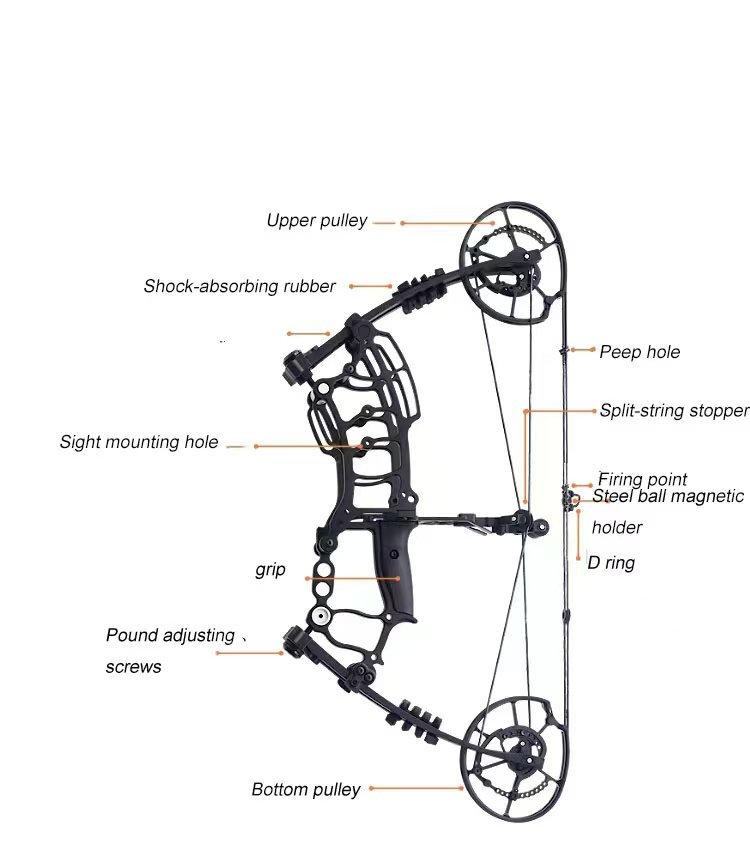
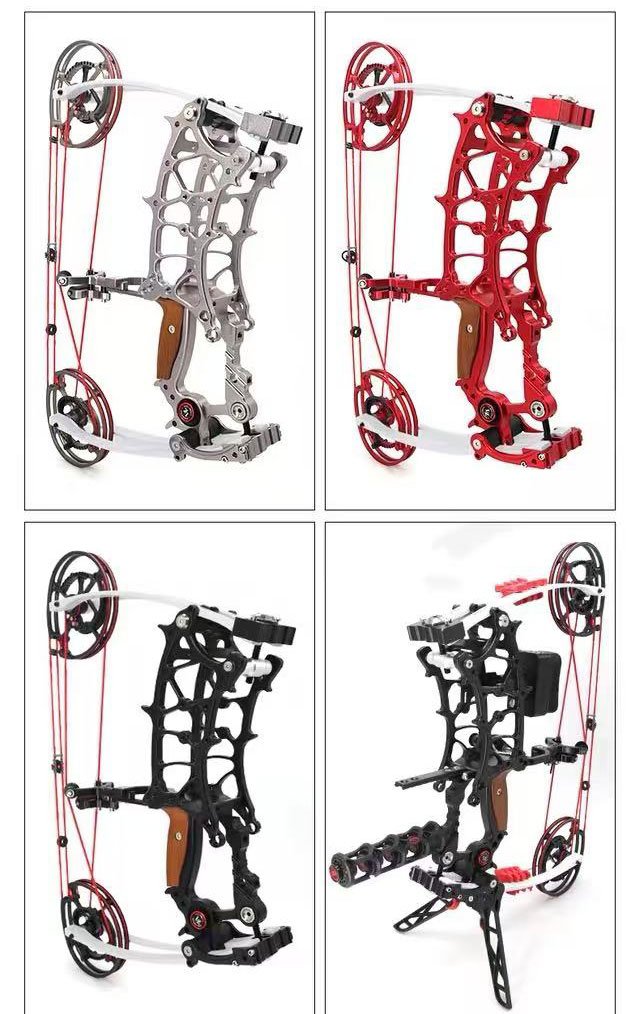
A compound bow is one of the most adaptable mechanical weapons in modern shooting sports, uniquely capable of launching both traditional arrows and solid steel balls with consistent power and accuracy. This dual‑functionality is not accidental; it arises from the bow’s advanced mechanical structure, adjustable energy system, modular accessory design, and balanced physical characteristics. Together, these features allow the same frame to serve two completely different projectile types, making the compound bow popular for hunting, target practice, and recreational shooting.
At the heart of the compound bow’s versatility is its cam‑pulley system, which distinguishes it from recurve and longbows. Instead of relying solely on limb flexibility, the compound bow uses eccentric cams and high‑tension cables to store energy far more efficiently. When drawn, the limbs compress and create intense potential energy, while the cam design provides a high let‑off ratio—often 70% to 80%—meaning the shooter holds only a fraction of the peak draw weight at full draw. This stable holding power benefits both arrows and steel balls: it allows steady aiming for long‑range arrow shots and controlled, precise launches for steel balls. The consistent, linear energy release ensures every shot transfers force smoothly, regardless of the projectile.
Another critical factor is the bow’s interchangeable and customizable accessories. For archery, the setup includes an arrow rest, a nocking point, fletching stabilization, and a precision sight. The arrow’s long shaft, flexible spine, and feather fletching work with the bow’s energy to maintain straight flight. To fire steel balls, users simply replace the arrow rest with a specialized ball holder—usually magnetic, spring‑loaded, or clip‑mounted—that securely grips the spherical projectile. A modified string adapter or bridge ensures the bowstring pushes the steel ball directly forward without slipping or lateral movement. Most conversion kits require no tools and take less than a minute, allowing quick transitions between arrows and steel balls in the field.
The compound bow is adjustable draw weight and length further expand its dual‑use ability. Most models offer a draw weight range from 30 to 70 pounds, letting shooters tune power to each projectile. Arrows, designed for distance and penetration, perform best at higher draw weights, which boost speed and kinetic energy. Steel balls, being small, dense, and unguided in flight, require moderate weight settings to balance speed, accuracy, and safety. The bow’s rigid, lightweight riser—usually made of aluminum alloy or carbon fiber—reduces vibration and hand shock, preventing energy loss and ensuring both arrows and steel balls fly predictably. Unlike fragile traditional bows, the compound bow’s reinforced limbs, braided cables, and heavy‑duty string withstand repeated impacts from both projectile types without warping or breaking.
Physically, the two projectiles complement the compound bow’s energy delivery rather than conflict with it. Arrows use aerodynamic shape and fletching to maintain stability over long distances, ideal for target shooting and medium‑to‑large game. Steel balls rely on high mass density to retain momentum, making them effective for short‑range practice, small‑game hunting, and skill training. The compound bow’s consistent force output works for both: it accelerates the light, long arrow to high speeds and drives the heavy, compact steel ball with enough force for reliable performance.
Safety and engineering balance complete the dual‑function design. Manufacturers structure dual‑use compound bows to prevent projectile misalignment, string slap, and dry firing. With proper setup—including correctly sized steel balls, intact accessories, and appropriate draw weight—the bow operates safely for both functions.
In conclusion, the compound bow’s ability to shoot both arrows and steel balls comes from its innovative cam system, interchangeable parts, adjustable power, and durable construction. It merges the precision of archery with the simplicity of steel‑ball shooting, creating a multi‑purpose tool for enthusiasts of all kinds. This engineering flexibility is why the compound bow remains a dominant and beloved choice in modern shooting activities.