The Physics Behind the Shot: A Deep Dive into the Youth Compound Bow
Picture this: you’re at an archery range, the crisp air filled with the scent of pine and the soft thwack of arrows finding their mark. You pick up a sleek, modern bow, its design a far cry from the simple wooden arcs of history. This isn’t just a piece of sporting equipment; it’s a masterpiece of applied physics, a youth compound bow that transforms human effort into a precise, powerful shot. Let’s pull back the string on the science that makes it all possible.
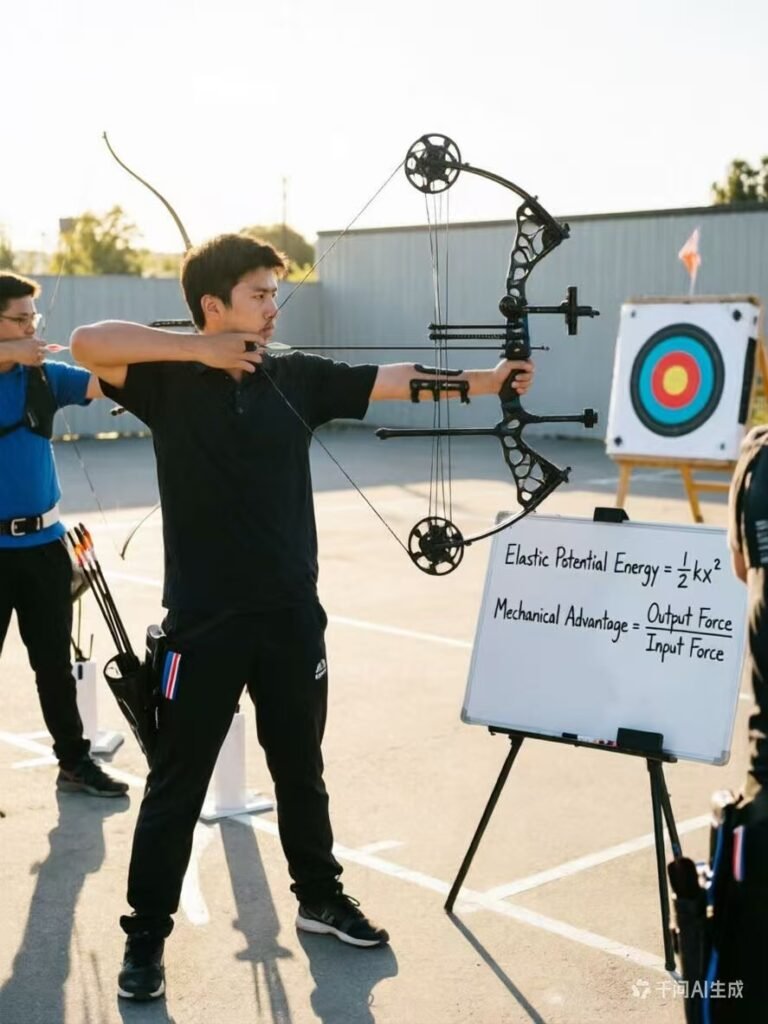
At its core, archery is a beautiful demonstration of energy conversion. When you draw a bow, you are doing work. The energy from your muscles doesn’t disappear; it’s stored within the bow itself. This is the principle of elastic potential energy. Think of the bow’s limbs as powerful, flexible springs. As you pull the string, you force these limbs to bend, deforming them. This deformation stores the energy you’ve expended. Upon release, this stored potential energy is rapidly converted into the kinetic energy of the arrow, sending it flying towards the target. The faster and more efficiently this transfer happens, the more powerful the shot.
So, what makes a youth compound bow different? The magic lies in its namesake: the compound system of cables and eccentric wheels, known as cams, located at the tips of the limbs. This ingenious mechanism fundamentally alters the force curve of drawing the bow, introducing the concept of mechanical advantage.
In a traditional bow, the force required to pull the string increases linearly. The further you draw, the harder it gets, peaking right at full draw. This makes holding steady to aim incredibly difficult, as your muscles are under maximum strain. It’s like lifting a heavy weight and trying to hold it perfectly still.
A compound bow changes the game. As you begin to draw, the cams rotate, and for the first part of the draw, the system offers little mechanical advantage. You’re working hard against the limbs’ resistance, and the draw weight climbs steeply to a peak. But as you continue to pull, the unique, non-circular shape of the cams comes into play. The cables begin to ride on a different part of the cam’s profile, effectively changing the lever arm. This creates a significant mechanical advantage, meaning the force you need to apply to continue drawing the bow decreases dramatically.
This phenomenon is famously known as “let-off.” It’s that incredible moment when the bow seems to pull itself the rest of the way back. A youth compound bow might have a peak draw weight of 50 pounds, but with an 80% let-off, you’re only holding 10 pounds at full draw. This is a direct application of torque and leverage. The cam system manipulates the torque required to hold the limbs in their fully bent state, allowing the archer to relax.
This reduced holding weight is a game-changer for accuracy. With significantly less strain on your back and arm muscles, you can hold your aim steady for longer, breathe calmly, and execute a clean release. The bow also features a “wall”—a mechanical stop that prevents you from over-drawing. This ensures a consistent draw length every single time, which is crucial for repeatable, accurate shots. It’s the physics of stability and consistency working in your favor.
The design of a youth compound bow is a perfect example of engineering for a specific user. For younger archers, it allows them to handle a bow with a high peak draw weight—which translates to faster arrow speeds and a flatter trajectory—without needing the immense strength of an adult. They can build their skills and strength over time, adjusting the bow’s settings as they grow. It’s a tool that grows with the archer, all thanks to the clever application of simple machines.
From the elastic potential energy stored in its composite limbs to the mechanical advantage provided by its eccentric cams, every aspect of a youth compound bow is a lesson in physics. It takes the raw power of the human body and, through the principles of work, energy, and leverage, refines it into an act of precision and grace. The next time you see an archer holding a compound bow at full draw, seemingly with ease, remember: they’re not just aiming at a target. They’re demonstrating the elegant power of physics in motion.