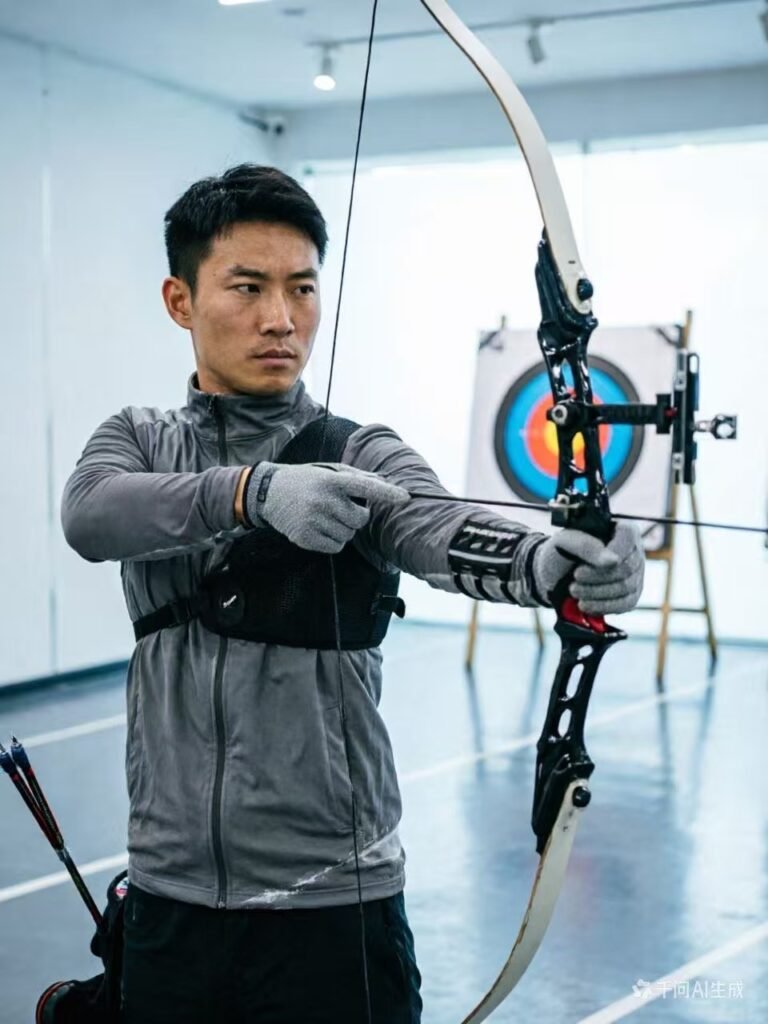
The Recurve Bow: A Journey of Focus from the Olympic Arena to Urban Life
When the Chinese Archery Team swept the 2026 Archery World Cup in Puebla, Mexico, claiming 3 golds, 1 silver, and 2 bronzes, the sight of three national flags rising simultaneously on the international stage once again thrust the ancient yet modern sport of the recurve bow into the global spotlight. The outstanding performances of “post-05” young talents like Zhu Jingyi, Huang Yuwei, and Yu Qi not only demonstrated the rising power of China’s new generation of archers but also brought this once-niche Olympic sport into the view of the wider public. However, the allure of the recurve bow extends far beyond the high-stakes drama of competitive sports. It is increasingly adopting the posture of a “meditative practice of focus,” transitioning from professional arenas to urban lifestyles, becoming a new choice for modern individuals seeking stress relief, physical shaping, and self-improvement.
The recurve bow, named for its distinctive shape where the limbs curve away from the archer at the tips, stands in contrast to the complex pulley systems of modern compound bows. Its structure is simpler, and its power delivery feels more organic. Yet, this “simplicity” is not rudimentary; rather, it represents an ultimate test of an archer’s physical control and mental concentration. Drawing the bow requires the coordinated effort of the back, arms, and core muscles; the moment of release demands steady breathing and a unified mind. This “slow-paced focus” provides a rare “mental buffer zone” for those navigating the fast-paced, high-pressure urban life. As many enthusiasts attest, when you raise the bow and your eyes see only the bullseye, with nothing but your own breath in your ears, all worries and anxieties seem to be temporarily shut out. That moment of tranquility and concentration is the most precious gift the recurve bow bestows upon its practitioners.
In recent years, the popularity of the recurve bow has surged domestically, a trend inextricably linked to the stellar performances of the national team. From the trials of the 2024 Paris Olympics to the breakthroughs at the 2025 Archery World Cup, and now the “strong start” of the 2026 season, China’s archers have proven the charm and value of this sport through their prowess. Their spirit of perseverance inspires more young people to pick up a bow and arrow, experiencing that unique blend of focus and power. Simultaneously, the increasing variety of domestic archery competitions—such as the National Archery Championship and the Archery World Cup Shanghai stage—provides platforms for enthusiasts to observe, learn, and exchange skills, further promoting the culture of the recurve bow.
For novices wishing to try the recurve bow, getting started is not as difficult as one might imagine. Firstly, the “cost-performance ratio” is quite high. An entry-level set, including the riser, limbs, basic sight, finger tab, and other accessories, typically ranges between 1,000 to 3,000 RMB, far less than the top-tier compound bows that can cost tens of thousands. Even for those just looking for an occasional experience, the equipment provided by most archery ranges is sufficient to meet a beginner’s needs without a large initial investment. Secondly, the learning curve for the recurve bow is relatively accessible. Its simple structure allows novices to grasp the fundamentals of gripping, nocking, drawing, and aiming more quickly, enabling them to devote more energy to refining their form and cultivating mental focus.
Of course, to avoid detours, beginners should be mindful of a few common pitfalls. First, do not blindly pursue top-tier equipment. Novices are often unaware of their specific parameters, such as draw length and draw weight. Top-tier recurve bows have fixed parameters that may not match one’s physical condition, potentially hindering performance and leading to bad habits or injury. It is advisable to practice with range equipment for 1-2 months to ensure commitment before purchasing gear based on a coach’s advice. Second, do not neglect the practice of fundamental techniques. Many assume the recurve bow is simple and rush the process, resulting in improper发力 (force application) during key phases like drawing and releasing. This not only stalls progress but risks physical injury. In the early stages, following a professional coach to correct form and build a solid foundation is crucial. Third, safety rules must be etched in memory. As a piece of sports equipment with inherent power, the recurve bow demands strict adherence to safety protocols like “never point the bow at a person” and “ensure arrows are directed at the target.” Retrieving arrows should only be done with the coach’s permission—a practice that ensures responsibility to oneself and others.
From the fierce competition of the Olympic arena to the quiet practice within an archery range, the recurve bow is connecting competitive sports with public life through its unique charm. It is not merely a tool for athletes to win glory for their country but also a mentor and friend for ordinary people to relax, cultivate focus, and improve themselves. Whether you are a sports enthusiast seeking athletic challenges, an office worker yearning for a moment of peace in a busy life, or a parent hoping to nurture patience and resilience in your child, the recurve bow offers a new perspective to feel the power of “focus” and experience the beauty of “tranquility.” Why not step into an archery range, pick up a recurve bow, and embark on a personal journey of “focus cultivation”?