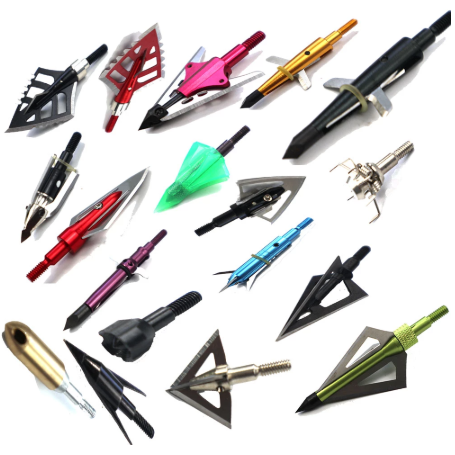
The arrowheads,broadheads as the business end of an arrow, is the single most critical component determining an arrow’s purpose and performance. From medieval warheads to modern competition tips, each design is engineered for a specific task, making the selection of the right arrowhead essential for archers, hunters, and enthusiasts alike. This article explores the primary categories of arrowheads, their unique characteristics, and their ideal applications, providing a comprehensive reference for archers of all levels.
- Field Points (Target Points)
Core Characteristics: Field points feature a streamlined, bullet-shaped design with a conical tip and a distinct shoulder. Constructed from durable materials like hardened steel or brass, they are engineered for minimal drag and maximum aerodynamic efficiency during flight. Their standardized weight ensures consistent performance, often matching the mass of hunting broadheads to allow archers to practice with the same setup they use in the field. The shoulder design prevents arrows from becoming lodged in obstacles like tree stumps or thick target foam, making them versatile for both indoor and outdoor use.
Ideal Applications:
- Target Practice & Competitive Archery: The gold standard for recurve and compound bow archers at all skill levels. Field points deliver precise, repeatable shots, making them indispensable for refining form, sight alignment, and consistency.
- Small Game Hunting: Suitable for taking small animals like squirrels or rabbits where penetration control is critical to avoid excessive meat damage.
- Training & Tuning: Essential for tuning arrow spines, bow rest height, and nock point positioning, as their predictable flight helps isolate equipment issues.
- Broadheads: The Lethal Hunting Tools
Broadheads are defined by their sharp, cutting blades, engineered to deliver maximum tissue damage and rapid blood loss for ethical hunting. They fall into two primary subcategories, each with distinct advantages and use cases.
2.1 Fixed-Blade Broadheads
Core Characteristics: Featuring rigid, unmoving blades (typically 2–4) secured directly to the head, fixed-blade broadheads have no moving parts, ensuring unmatched reliability. Constructed from high-carbon steel or stainless steel, they offer exceptional penetration power, making them ideal for challenging hunting conditions. Their solid design minimizes energy loss upon impact, allowing arrows to pass through large game and create deep, effective wound channels.
Ideal Applications:
- Big Game Hunting: The top choice for deer, elk, moose, and wild boar. Fixed blades excel in dense cover, as they are less likely to be deflected by branches or brush compared to mechanical alternatives.
- Dangerous Game: Recommended for hunting buffalo, bears, and other large, dangerous species where maximum penetration and reliability are non-negotiable.
- Traditional Archery: A staple for traditional bow hunters, as their classic design aligns with the heritage and performance needs of longbow and recurve shooters.
2.2 Mechanical Broadheads
Core Characteristics: Mechanical broadheads feature blades that remain closed during flight to reduce drag and improve accuracy, then deploy automatically upon impact with a target. This design creates wider cutting diameters (often 1.5–2 inches) than fixed blades, maximizing wound trauma for quicker kills. While they offer superior aerodynamic performance, their moving parts (springs, O-rings, pivot points) introduce potential failure points, requiring careful maintenance and quality construction.
Ideal Applications:
- Deer & Medium-Sized Game: Perfect for archers seeking flat trajectories and consistent accuracy at typical hunting distances (20–40 yards). Many mechanicals are designed to fly like field points, simplifying setup and practice.
- Crossbow Hunting: Popular for crossbow users, as the high speed of crossbow bolts enhances blade deployment reliability.
- New Hunters: Beginner-friendly, as their forgiving flight characteristics help offset minor form errors, making them a great entry point for those new to bowhunting.
- Bodkin Points: The Armor-Piercing Legacy
Core Characteristics: Bodkin points are characterized by their short, rigid, needle-like design with a small cross-section. Historically crafted from unhardened iron, modern bodkins use high-carbon steel for enhanced strength. Originally developed to extend range or serve as a cost-effective alternative to broadheads, modern tests have shown that hardened steel bodkins can penetrate Damascus chainmail, though they are less effective against plate armor. Their narrow profile minimizes air resistance, making them efficient for long-distance shots.
Ideal Applications:
- Historical Reenactment: Authentically replicates medieval archery tactics and equipment, ideal for living history events or competitive historical archery divisions.
- Specialized Hunting: Occasionally used for taking thin-skinned small game or predators where precise, low-damage shots are needed, though they are less common in modern hunting circles.
- Hard Target Practice: Suitable for testing arrow penetration on materials like thin metal or dense wood, though their use on modern targets is limited by safety concerns.
- Blunt Points: The Non-Lethalal Stunners
Core Characteristics: Blunt points feature a flat, unsharpened tip, typically made from rubber, hard plastic, or steel. Instead of cutting, they deliver concussive force to stun targets, making them ideal for situations where penetration must be avoided. Their design reduces the risk of over-penetration and target damage, and they are often used with flu-flu fletching (extra-long feathers) to slow arrows quickly.
Ideal Applications:
- Small Game Hunting: Perfect for rabbits, squirrels, and grouse, where blunt force trauma ensures a quick, humane kill without damaging meat.
- Youth Archery: Safe and user-friendly for young archers learning to shoot, minimizing the risk of accidental damage to property or targets.
- Roving & Field Practice: Ideal for shooting at stumps, rocks, or other natural targets, as blunts prevent arrows from getting lost or stuck in hard materials.
- Judo Points: The Grass-Grabbing Retrieval Tools
Core Characteristics: Judo points feature a central tip with spring-loaded wire arms extending sideways, resembling the claws of a bird of prey. These arms catch on grass, leaves, or brush, preventing arrows from being lost in dense vegetation. Weighing the same as popular broadheads, they maintain consistent flight characteristics, making them practical for both practice and small game hunting.
Ideal Applications:
- Big Game Hunting: Enhances penetration for large, tough animals, especially in situations where arrow speed is limited.
- Long-Range Competition: Improves arrow stability at extended distances, reducing the effects of wind and gravity.
- Bowfishing: Ideal for fast-swimming fish, as their density ensures arrows reach targets quickly underwater.
7.2 Safety Arrows
Core Characteristics: Designed for recreational archery tag, combat reenactments, or youth programs, safety arrows feature padded, wide, or foam heads to minimize injury risk. They are often used with bows of reduced draw weight to ensure safe operation.
Ideal Applications:
- Archery Tag & Recreational Combat: Standard equipment for safe, interactive archery games and team-building events.
- Youth & Beginner Programs: Essential for teaching children basic archery skills without the risk of injury from sharp tips.
- Historical Reenactment: Authentic and safe alternatives to medieval warheads for educational demonstrations.
Choosing the Right Arrowhead: Key Considerations
When selecting an arrowhead, archers must prioritize their intended use, equipment compatibility, and safety. Here are critical factors to evaluate:
1. Purpose: Match the arrowhead to your activity—target practice, big game hunting, small game, or bowfishing.
2. Bow Compatibility: Ensure the arrowhead’s weight and design are suitable for your bow’s draw weight and speed. Compound bows often benefit from heavier points for optimal FOC (Front of Center) balance, while traditional bows may prefer lighter, simpler designs.
3. Target Material: Field points are best for foam/paper targets; broadheads are for animal hide and muscle; blunts for soft, non-penetrating targets.
4. Skill Level: Beginners may prefer mechanical broadheads or field points for forgiving performance, while experienced hunters often favor fixed blades for maximum reliability.
Conclusion
Arrowheads are the heart of archery performance, with each type engineered to excel in specific roles. From the precision of field points to the lethal power of fixed-blade broadheads, the right choice depends on your goals, equipment, and shooting style. By understanding the unique characteristics and applications of each arrowhead, archers can optimize their performance, ensure ethical hunting, and enjoy the full potential of their equipment. Whether competing at the range or pursuing game in the wild, selecting the perfect arrowhead is the first step to archery success.