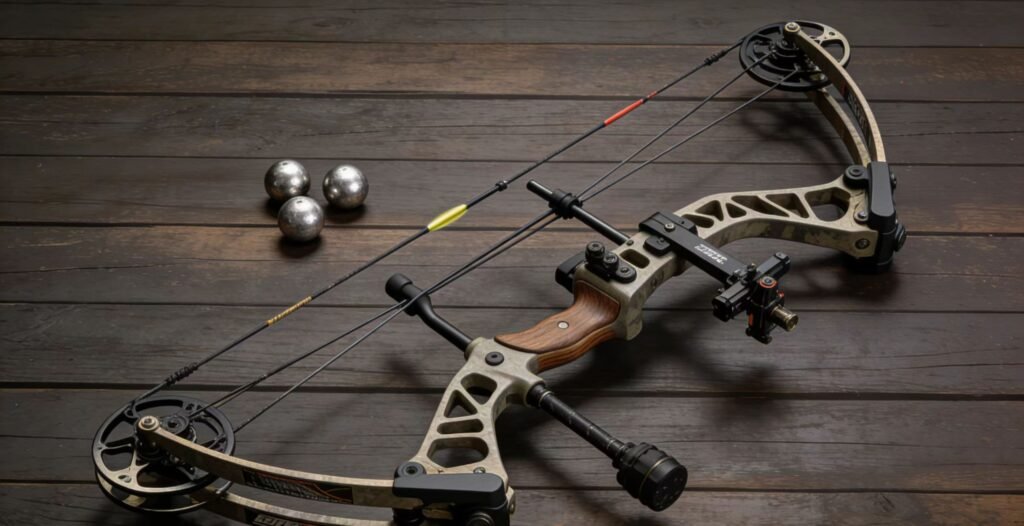
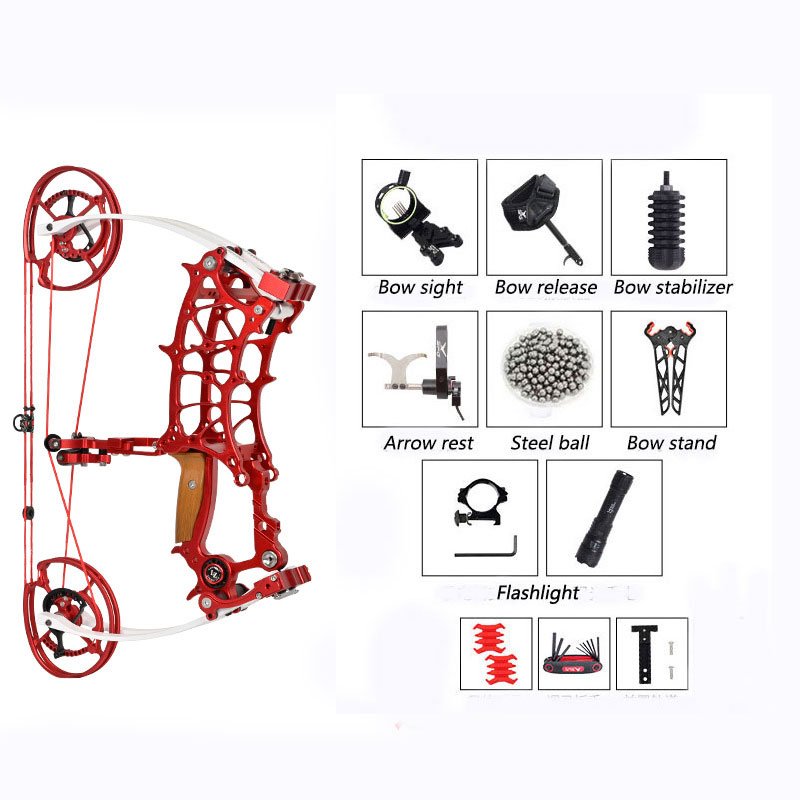
The compound bow has emerged as a popular tool for sports enthusiasts, hunters, and hobbyists worldwide, thanks to its precision, adjustability, and mechanical efficiency. A common question among both new and experienced users is: Why is shooting steel balls with a compound bow legal? Unlike firearms, crossbows, or other regulated weapons, the compound bow—even when used to fire steel balls—falls outside the scope of most legal restrictions in many countries. This article explores the legal foundations, key distinctions, and contextual factors that make this practice legal, while highlighting the responsible use of compound bows to ensure compliance and safety.
To understand the legality of shooting steel balls with a compound bow, it is first critical to define the compound bow itself and distinguish it from regulated weapons. A compound bow is a modern archery device that uses a system of cams, pulleys, and cables to reduce the draw weight required to hold the string at full draw, enabling greater accuracy and power compared to traditional recurve or longbows. Unlike firearms, which rely on explosive combustion to propel projectiles, the compound bow uses stored mechanical energy from its limbs to launch steel balls or arrows—this fundamental difference is the cornerstone of its legal status.
In most jurisdictions, the legality of a weapon or tool hinges on its classification under local and national laws. Firearms, for example, are strictly regulated because their explosive propulsion creates lethal force that is difficult to control and poses significant public safety risks. The compound bow, by contrast, is not classified as a firearm by regulatory bodies like the U.S. Bureau of Alcohol, Tobacco, Firearms, and Explosives (ATF) because it does not use explosives or combustion to propel projectiles. This distinction is enshrined in laws like the U.S. Gun Control Act of 1968 and the National Firearms Act (NFA), which explicitly exclude bows—including compound bows—from firearm regulations because their propulsion mechanism is mechanical, not explosive.
This classification holds true in many other countries as well. In China, for instance, the 《中华人民共和国治安管理处罚法》(Public Security Administration Punishments Law) explicitly regulates firearms, ammunition, crossbows, and daggers as controlled instruments, but does not include compound bows in this list. As long as the compound bow is not modified to meet the criteria of a simulated gun (e.g., exceeding a specific muzzle energy threshold) or crossbow, it remains legal to own and use for legitimate purposes. In European countries like France, Spain, and Italy, compound bows are generally legal for personal use, though some nations (such as Germany) require a license for ownership, and the UK restricts their use to dedicated archery clubs or private propertysuperscript:11__. Even in countries with strict weapon laws, the compound bow’s mechanical design and non-explosive propulsion keep it outside the scope of regulated firearms.
Another key factor in the legality of shooting steel balls with a compound bow is the intended use of the tool. Most laws differentiate between tools used for legitimate purposes (such as sport, recreation, or hunting) and those used for harm or illegal activities. The compound bow, when used to shoot steel balls, is typically employed for target practice, recreational shooting, or even small-game hunting in regions where it is permitted. These legitimate uses align with the purpose of archery as a sport and hobby, which is widely recognized and supported by regulatory bodies and sports organizations like the National Field Archery Association (NFAA).
In contrast, if a compound bow is modified to increase its lethality—such as altering its draw weight to exceed safe limits, or modifying it to function like a crossbow—it may be reclassified as a controlled instrument, rendering its use illegal. Similarly, using a compound bow to shoot steel balls in a reckless manner (e.g., in public spaces, at people, or at protected wildlife) can lead to legal consequences, not because the compound bow itself is illegal, but because the user’s actions violate public safety or wildlife protection laws. For example, using a compound bow to hunt in a protected area or during a禁猎期 (closed season) violates wildlife protection laws in many countries, regardless of the tool used.
The legality of steel balls themselves also plays a role in this discussion. Steel balls used with compound bows are typically small, non-explosive, and non-toxic, distinguishing them from ammunition used in firearms. Unlike bullets, which are designed to penetrate and cause lethal harm, steel balls used for archery are often used for target practice, where their weight and size are calibrated for accuracy rather than lethality. In most jurisdictions, steel balls are not classified as ammunition (which is regulated alongside firearms) but as small metallic projectiles, making their possession and use legal when paired with a compound bow for legitimate purposes.
It is also important to note that while shooting steel balls with a compound bow is legal in most places, there are regional variations and restrictions that users must respect. In the United States, for example, most states allow the use of compound bows for hunting and recreation, but some require a hunting license for bowhunting, and municipal ordinances may restrict shooting in urban areassuperscript:6__. In New Zealand, compound bows are legal for hunting, but a minimum draw weight of 35 lbs is required for hunting deer species. In Zimbabwe, bowhunting with compound bows is permitted on private or tribal lands but not in national parks, and hunters must be accompanied by licensed guides. These regional differences highlight the importance of researching local laws before using a compound bow to shoot steel balls.
Responsible use is another critical aspect of maintaining the legality of shooting steel balls with a compound bow. Regulatory bodies and archery organizations emphasize that compound bow users must follow safety guidelines to prevent harm to themselves, others, and property. This includes using the compound bow only in designated areas (such as archery ranges or private property), ensuring that the steel balls are not fired at living targets (except for legal hunting), and avoiding modifications that increase the bow’s lethalitysuperscript:8__. By adhering to these guidelines, users uphold the legitimate use of the compound bow and avoid legal issues that may arise from reckless behavior.
Critics may argue that compound bows, even when shooting steel balls, pose a safety risk, but this does not negate their legality. Every tool, from a knife to a car, carries inherent risks, but legality is determined by the tool’s design, intended use, and the ability to regulate its safe use. The compound bow’s mechanical design allows for precise control—users can adjust the draw weight and length to suit their skill level, reducing the risk of accidental discharge or harm. Additionally, archery organizations and retailers provide training and safety resources to help users learn how to handle compound bows responsibly, further mitigating risks.
In summary, shooting steel balls with a compound bow is legal in most jurisdictions for several key reasons: the compound bow is not classified as a firearm due to its mechanical propulsion system, it is used for legitimate purposes like sport and recreation, steel balls are not regulated as ammunition, and regional laws generally permit their use when used responsibly. The key distinction between compound bows and regulated weapons lies in their design and function—unlike firearms, compound bows rely on stored mechanical energy, not explosives, making them safer and less likely to be used for illegal activities.
As the popularity of compound bows continues to grow, it is essential for users to understand and respect local laws and safety guidelines. By using the compound bow responsibly, users can enjoy the sport of archery while maintaining the legality of their actions. Whether for target practice, recreation, or hunting, the compound bow remains a legal and accessible tool for enthusiasts worldwide, thanks to its unique design and alignment with legitimate uses recognized by law.
For those interested in using a compound bow to shoot steel balls, it is always recommended to check local regulations, complete safety training, and use the tool in designated areas. By doing so, you can ensure that you remain compliant with the law while enjoying the precision and excitement that the compound bow has to offer.