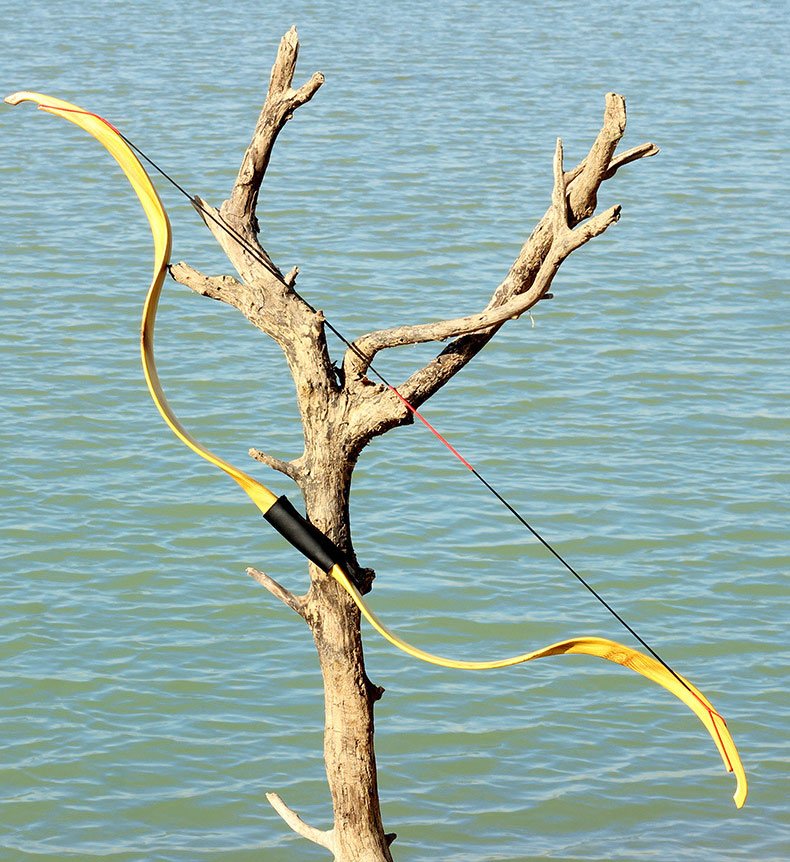
The Traditional Recurve Bow: A Timeless Synthesis of History, Craft, and Modern Revival
In the vast arsenal of human history, few implements have captured the imagination and utility quite like the traditional recurve bow. Long before the advent of gunpowder or the precision engineering of modern compound bows, the recurve bow stood as the supreme ranged weapon, shaping the destinies of empires and the outcomes of battles from the steppes of Mongolia to the forests of Europe. Unlike its straight-limbed cousin, the longbow, the recurve bow is defined by a distinct geometric elegance: its tips curve away from the archer when unstrung. This design is not merely aesthetic; it is a masterpiece of ancient physics, storing potential energy with greater efficiency and delivering kinetic energy with a velocity that revolutionized warfare.
The fundamental mechanics of the traditional recurve bow rely on the principle of pre-stressed elasticity. When the bow is unstrung, the limbs curve forward. Stringing the bow requires significant force to pull these tips back, effectively “pre-loading” the weapon. This stored energy means that for a given draw length, a recurve bow can be significantly shorter than a longbow of equivalent power. This compactness was a tactical game-changer, particularly for mounted archery. A six-foot longbow is unwieldy on horseback, but a recurve bow of similar draw weight can be compact enough to maneuver while riding at full gallop. This mobility allowed civilizations like the Huns, Mongols, and Parthians to dominate vast territories, utilizing hit-and-run tactics that slower, infantry-based armies could not counter.
The construction of a traditional recurve bow is a testament to the ingenuity of ancient materials science. While modern bows often utilize machined aluminum and carbon fiber, the traditional recurve is a marvel of composite engineering. Historically, these bows were crafted using a lamination of natural materials, each chosen for its specific tensile or compressive properties. The core was typically wood, providing the shape and bulk. On the belly of the bow—the side facing the archer—layers of horn were glued. Horn is exceptionally resistant to compression, allowing it to withstand the immense pressure of the draw without buckling. On the back of the bow—the side facing the target—sinew (animal tendon) was applied. Sinew is incredibly strong in tension, capable of stretching slightly and snapping back with immense force.
This composite construction created a weapon that was not only powerful but resilient in extreme climates. The famous Mongol bow, for instance, was designed to function in the freezing temperatures of the Asian steppes where a simple wooden bow might become brittle and snap. The complexity of making such a bow elevated the bowyer to a status of high respect, akin to a master smith. The process was labor-intensive, requiring a deep understanding of the materials’ behavior over time. A single bow could take a year or more to complete, from the selection of the wood to the final curing of the sinew. This investment of time resulted in a weapon that was often decorated with intricate carvings or bark birch covering, serving as both a tool of war and a piece of art.
Culturally, the traditional recurve bow occupies a central place in the heritage of many nations. In China, the development of the recurve bow can be traced back to the Han Dynasty, where it was favored for its ability to penetrate armor. The “Manchu bow” or Qing bow, with its large, distinct ears (siyahs) at the tips, represents the pinnacle of this Asian tradition. These stiff ears acted as levers, increasing the mechanical advantage at the end of the draw. In the West, while the English longbow is often romanticized, the recurve form was known and used, particularly in the form of the Scythian and Sarmatian bows that influenced European warfare. The transition from the simple self-wood bow to the composite recurve marked a significant technological leap, democratizing power by allowing a smaller, lighter warrior to generate force comparable to a much larger opponent.
In the modern era, the traditional recurve bow has transitioned from the battlefield to the arena of sport and hobby. While Olympic archery utilizes highly stabilized, sight-equipped recurve bows, there is a thriving subculture dedicated to “traditional archery.” These enthusiasts strip away the stabilizers, sights, and clickers, returning to the instinctive shooting style of their ancestors. They seek the tactile connection with history, using bows made of wood, horn, and sinew, or modern interpretations like the take-down recurve. This resurgence is not just about nostalgia; it is about mastering a skill that requires intense physical discipline and mental focus. Shooting a traditional recurve is a fluid motion, a “dance” between the archer and the bow, where the release of the string feels like an extension of the archer’s own heartbeat.
However, the preservation of this ancient art form requires more than just enthusiastic hobbyists; it demands a concerted effort in inheritance and innovation. Today, the legacy of the traditional recurve bow is being kept alive through a blend of (Intangible Cultural Heritage) protection, educational integration, and modern commercial adaptation.
One of the most vital aspects of this preservation is the recognition of bow-making as a cultural heritage. In many regions, master bowyers are now designated as inheritors of intangible cultural heritage. This status provides them with the resources and platform to pass down their skills. For instance, young artisans are now stepping up to learn the painstaking “white work” and “painting work” stages of bow construction, ensuring that the specific knowledge of selecting wood grain, processing horn, and treating sinew is not lost to time. These modern masters are not just replicating old weapons; they are engaging in a dialogue with history, understanding the physics and philosophy embedded in the craft.
Furthermore, the spirit of the traditional recurve bow is finding new life in educational and community settings. Archery clubs and cultural associations are moving beyond simple target practice to teach the philosophy of “observing virtue through shooting.” This concept, rooted in ancient texts, emphasizes that archery is a method of self-cultivation and character building. By integrating these traditional values into modern training, instructors are teaching students that the bow is not just a tool for hitting a target, but a mirror for one’s own mind and spirit. This approach has proven particularly effective in engaging youth, who find a sense of calm and focus in the “slow” craft of traditional archery amidst a fast-paced digital world.
The commercial and tourism sectors have also played a pivotal role in popularizing the traditional recurve bow. In cultural hubs and tourist destinations, archery体验馆 (experience halls) allow visitors to try their hand at shooting traditional bows, often while dressed in historical attire. This immersive experience transforms abstract history into a tangible, physical reality. Moreover, modern bowyers are adapting traditional aesthetics to contemporary needs, creating “take-down” recurve bows that are portable and durable enough for travel but retain the look and feel of ancient weaponry. This fusion of tradition and modern convenience has opened up the sport to a wider audience, ensuring that the traditional recurve bow remains not just a museum piece, but a living, breathing part of modern culture.
In conclusion, the traditional recurve bow is far more than a simple curved stick with a string. It is a sophisticated machine of the pre-industrial age, a composite of nature’s strongest materials, and a symbol of human adaptability. Its design solved the problems of power and portability that defined ancient warfare, and its legacy continues to inspire archers today. Through the dedicated efforts of cultural inheritors, educators, and modern craftsmen, the traditional recurve bow is experiencing a renaissance. It stands as a bridge between the past and the future, reminding us that even in an age of technology, there is profound beauty and power in the simple act of drawing a bow.