The Silent Saboteurs: Navigating Common Pitfalls in Recurve Bow Archery
The image of an archer drawing a recurve bow is one of timeless elegance and focused power. Whether in the context of the Olympic Games or a quiet weekend at the local range, the recurve bow stands as a symbol of precision. However, beneath this veneer of grace lies a complex mechanical interaction between human and equipment that is fraught with potential error. For the aspiring archer, the journey to proficiency is often obstructed not by a lack of talent, but by the persistence of subtle, ingrained misconceptions. These—ranging from fundamental stance issues to nuanced release flaws—act as silent saboteurs, limiting accuracy and consistency. To master the recurve bow, one must first understand the common traps that await the unwary.
The first and perhaps most foundational lies in the archer’s stance. It is tempting to view the feet merely as a platform, yet they are the bedrock upon which the entire shot is built. A frequent error is adopting a stance that is too narrow or unstable, often with feet placed directly parallel to the shooting line. While this “square stance” is often taught to beginners for its simplicity, failing to evolve beyond it or executing it poorly can lead to significant balance issues. If the feet are too close together, the archer creates a narrow base of support, making them susceptible to swaying in the wind or losing balance during the draw. Conversely, an overly wide stance can restrict the rotation of the hips and limit the archer’s ability to engage their back muscles effectively. The ideal stance requires a width equal to or slightly wider than the shoulders, with the body’s center line maintained vertically. Without this solid foundation, the energy transfer from the ground up is disrupted, causing the archer to fight for stability rather than focusing on the target.
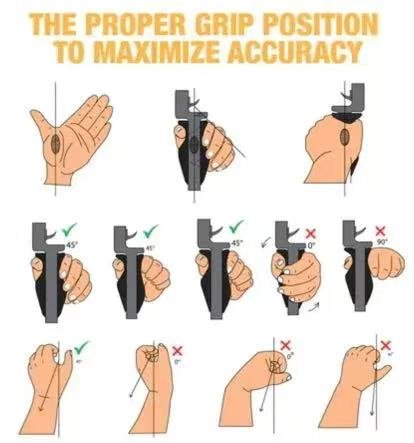
Closely linked to the stance is the surrounding the bow grip. Many novices approach the recurve bow with the instinct to “hold” it tightly, fearing that a loose grip will cause the bow to fall. This is a critical error. A tight grip introduces torque, twisting the bow handle at the moment of release. This torque forces the arrow to fishtail in flight, drastically reducing accuracy. The bow should not be gripped but rather cradled. The pressure should be directed into the “V” of the hand, between the thumb and forefinger, with the fingers relaxed and curled loosely around the handle. The recurve bow should be allowed to jump forward upon release; resisting this natural movement with a tense hand is a surefire way to induce inconsistency. The hand must be relaxed enough that, in theory, the bow could balance there without falling, yet stable enough to control the aim.
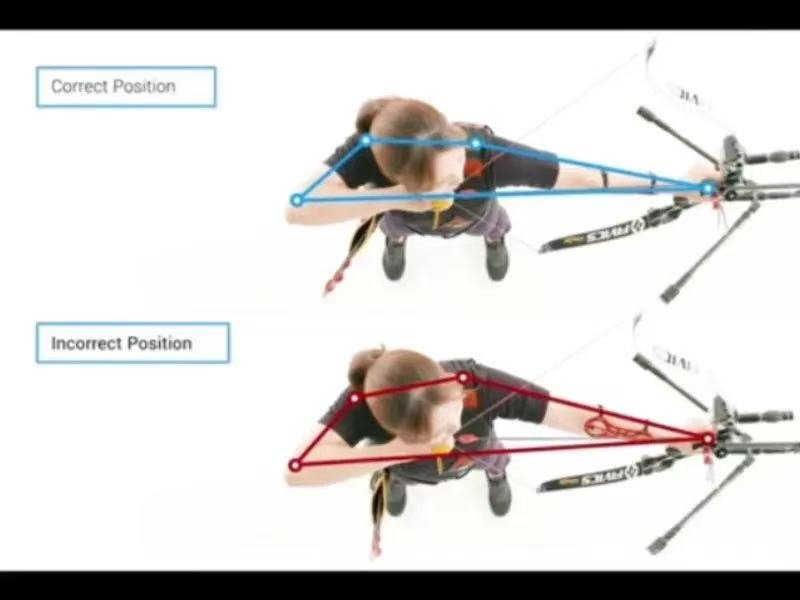
As the archer draws the string, the concept of the “anchor point” becomes paramount, yet it is a frequent source of confusion. The anchor point is the specific spot on the face where the drawing hand comes to rest at full draw. A common is treating this point as a general “area” rather than a precise coordinate. An inconsistent anchor—where the hand floats slightly higher or lower, or the string touches a different part of the nose or lip from shot to shot—introduces vertical and horizontal variances that are magnified over distance. Precision requires a “hard” anchor, where the index finger consistently touches the corner of the mouth or the jawline, and the string aligns perfectly with the nose and sight pin. This consistency builds the muscle memory necessary for repeatable accuracy. Without a solid anchor, the archer is essentially guessing the draw length and sight picture every single time.
Perhaps the most technical and elusive involves the release, or “loose.” In the world of recurve bow archery, the release is not a conscious act of opening the fingers but a surprise event triggered by back tension. However, many archers fall into the trap of “plucking” the string or “snatching” the release. This occurs when the archer anticipates the shot and actively snaps their fingers open or jerks their hand away from the face. This abrupt movement disturbs the string’s path and the bow’s stability. A correct release should feel like a continuation of the back tension, where the fingers simply part ways with the string as the back muscles expand. The hand should move backward along the jawline in a smooth follow-through, rather than flying off to the side. This is often difficult to self-diagnose because it happens in a split second, but it is often the primary culprit behind erratic grouping.
Beyond technique, misconceptions about equipment, specifically arrow spine and draw weight, can derail an archer’s progress. A dangerous is the belief that a heavier bow is always better. Beginners often overestimate their strength, purchasing a recurve bow with a draw weight that is too high. This leads to “snatching” the shot to get it over with, poor form due to muscle fatigue, and a higher risk of injury. A lighter bow allows for the development of clean mechanics and proper alignment. Furthermore, the selection of arrows is critical. Arrows must have the correct “spine” or stiffness to match the bow’s draw weight and the archer’s draw length. If the spine is too weak (too flexible), the arrow will flex excessively around the bow riser—a phenomenon known as the Archer’s Paradox—and veer off course. If it is too stiff, it will not flex enough, also causing deviation. Understanding that the arrow must dynamically bend around the bow to fly straight is essential for proper equipment tuning.
Finally, there is the of “target panic” or rushing the shot. In an effort to beat the clock or simply due to a lack of patience, archers often rush the expansion phase. They draw, aim, and immediately release without settling into the shot. This haste prevents the proper engagement of back tension and leads to a compromised release. Archery is a sport of patience; the shot should be a slow, controlled process where the archer expands into the clicker (if used) or settles into the aim.
In conclusion, mastering the recurve bow is as much about unlearning bad habits as it is about learning new skills. The of a shaky stance, a death grip on the handle, a floating anchor point, a plucked release, and mismatched equipment are hurdles that every archer must clear. By recognizing these common pitfalls and addressing them with mindful practice, the archer can transform their experience from one of frustration to one of fluid, consistent precision. The recurve bow rewards those who respect the details, turning the chaotic potential of error into the focused reality of a bullseye.